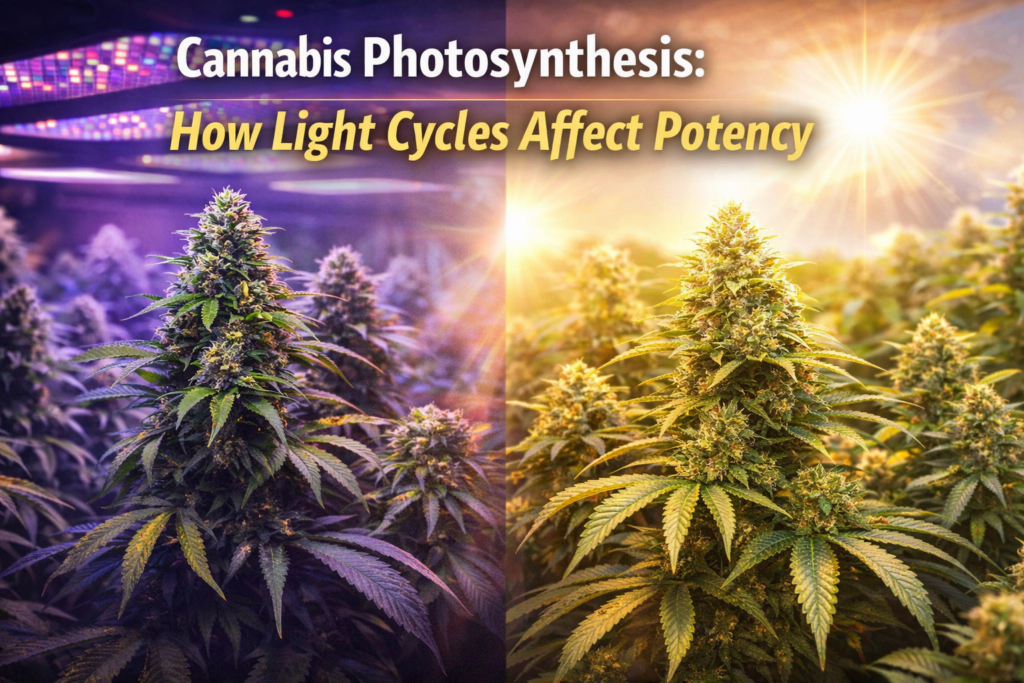
Understanding the science behind cannabis cultivation reveals why light isn’t just energy for your plants—it’s the secret ingredient that determines potency, terpene profiles, and overall quality. Whether you’re a curious consumer in Ottawa or someone interested in the cultivation process, knowing how light cycles influence cannabis can help you appreciate the premium products available at your local dispensary.
The Science of Cannabis Photosynthesis
Photosynthesis is the fundamental process that allows cannabis plants to convert light energy into chemical energy. During this process, plants absorb light through chlorophyll, combine it with carbon dioxide and water, and produce glucose and oxygen. For cannabis specifically, this process doesn’t just sustain growth—it directly influences the production of cannabinoids and terpenes that define your experience.
Cannabis is a photoperiod-sensitive plant, meaning its growth stages are triggered by changes in light exposure. In nature, cannabis responds to seasonal changes in daylight hours. Cultivators have learned to manipulate these light cycles to optimize plant development and maximize the production of THC, CBD, and other valuable compounds.
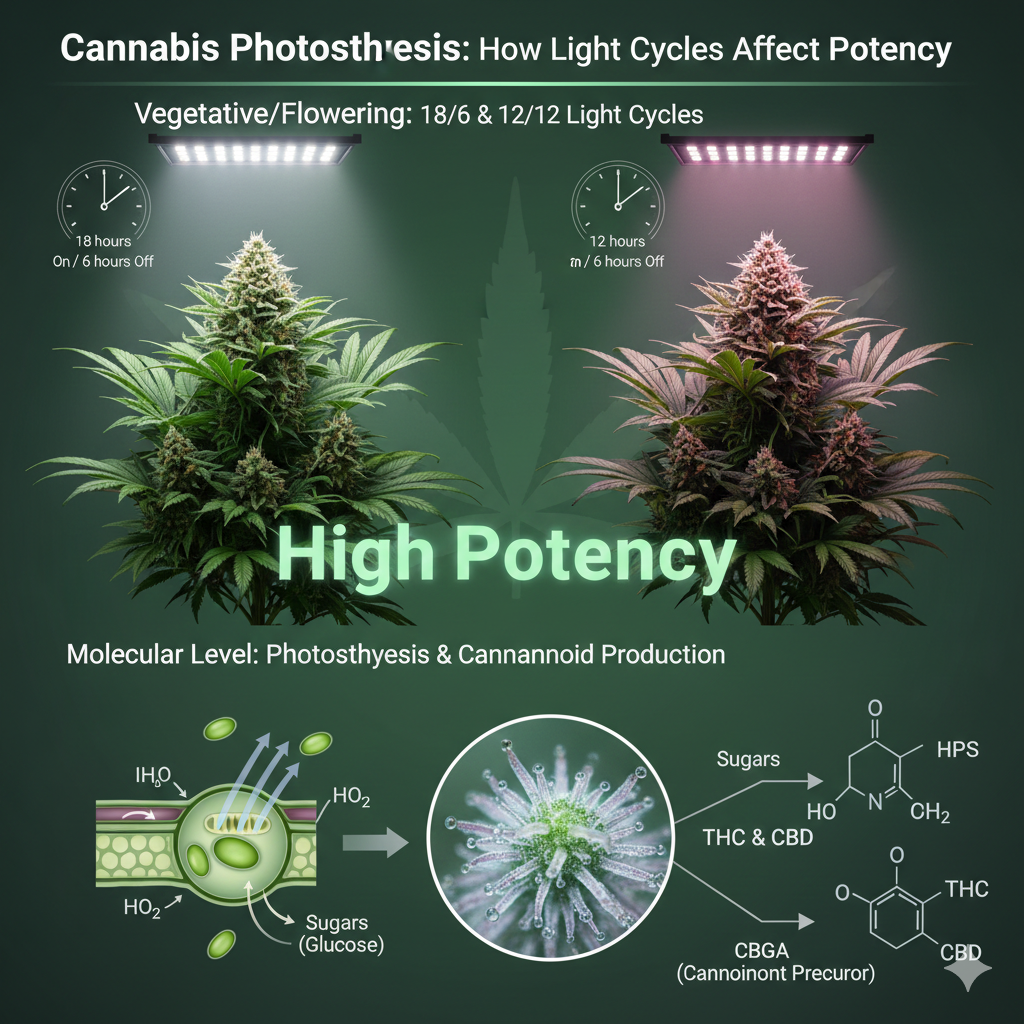
The relationship between light and potency is intricate. During the vegetative stage, cannabis plants require longer light periods—typically 18 hours of light and 6 hours of darkness. This extended photoperiod promotes vigorous growth, allowing plants to develop strong structures and abundant foliage. However, it’s during the flowering stage, triggered by switching to 12 hours of light and 12 hours of darkness, that cannabinoid production reaches its peak.
Vegetative Stage: Building the Foundation
During the vegetative phase, cannabis plants focus entirely on structural development. The 18/6 light cycle provides ample energy for photosynthesis while giving plants essential recovery time during darkness. This stage is crucial because a healthier, more robust plant during vegetation will produce more potent flowers later.
Light intensity and spectrum also play critical roles. Blue-spectrum light (400-500nm) is particularly important during vegetation, promoting compact, bushy growth with tight node spacing. This creates more potential flowering sites, ultimately leading to higher yields of potent buds.
When you purchase high-quality cannabis flowers from reputable sources, you’re benefiting from this carefully managed vegetative period. The Donny Burger strain, for example, showcases the results of optimal vegetative growth—dense, resinous buds that deliver powerful effects. This AAAA-grade flower demonstrates how proper light management during cultivation translates directly to potency and quality in the final product.
Flowering Stage: Maximizing Cannabinoid Production
The magic happens when cultivators flip the lights to a 12/12 cycle. This simulates the shorter days of late summer and autumn, triggering cannabis plants to enter their reproductive phase. It’s during flowering that trichomes—the tiny, crystal-like structures on cannabis buds—begin producing THC, CBD, and terpenes in earnest.
Research has shown that light stress during flowering can actually increase cannabinoid production. Some cultivators implement techniques like reducing light hours to 10/14 or even introducing periods of complete darkness before harvest to push plants to produce more trichomes as a stress response.
The spectrum shifts to red and far-red light (600-730nm) during flowering become particularly important. These wavelengths promote bud development and can enhance terpene production, giving cannabis its distinctive aromas and flavors. The result is flowers with complex cannabinoid and terpene profiles.
For consumers in Gatineau and surrounding areas looking for flowers that showcase this optimal flowering process, the Pink Cookies strain exemplifies what happens when light cycles are perfectly executed. This AAAA strain delivers exceptional potency with a rich terpene profile, demonstrating the direct connection between cultivation practices and product quality.
Light Quality and Spectrum: Beyond Duration
While photoperiod timing is crucial, the quality and spectrum of light matter just as much. Modern cultivation has moved far beyond simple fluorescent or HPS (High-Pressure Sodium) lights. LED technology now allows growers to fine-tune the exact wavelengths their plants receive throughout each growth stage.
Full-spectrum lighting that mimics natural sunlight tends to produce the most well-rounded cannabinoid profiles. However, many cultivators supplement with specific wavelengths to enhance certain characteristics. UV-B light exposure, for instance, has been shown to increase THC production as plants create more trichomes to protect themselves from UV radiation.
This attention to light quality is particularly evident in premium concentrates. When plants receive optimal light throughout their lifecycle, they produce more abundant and potent trichomes—the very structures harvested to create concentrates. The Pink Rozay Diamonds showcase this principle perfectly. These crystalline concentrates represent the pinnacle of cannabinoid extraction, with potency levels that reflect the quality of the source material cultivated under ideal lighting conditions.
The Darkness Factor: Why Plants Need Rest
Interestingly, darkness is just as important as light in cannabis cultivation. During dark periods, plants undergo essential processes that don’t occur under light. These include respiration, nutrient uptake, and critical hormonal changes that regulate growth and flowering.
The dark period during flowering is particularly sacred—interrupting it even briefly with light can stress plants, potentially causing them to revert to vegetative growth or develop both male and female flowers (hermaphroditism). This stress can reduce potency and overall quality.
Some cultivators extend darkness before harvest, implementing 24-48 hours of complete darkness in the final days. The theory suggests this final dark period pushes plants into survival mode, triggering a last surge of trichome production. While research is still ongoing, many growers swear by this technique for maximizing potency.
Environmental Factors Working with Light
Light cycles don’t work in isolation. Temperature, humidity, and CO2 levels all interact with photosynthesis to determine final potency. During light hours, temperatures typically range from 24-28°C (75-82°F) to optimize photosynthetic rates. During darkness, temperatures drop by 5-10 degrees, mimicking natural conditions and allowing plants to process the day’s photosynthetic production.
Humidity also shifts between light and dark periods. Lower humidity during flowering’s light hours helps prevent mold while encouraging resin production. These carefully controlled environmental conditions, working in harmony with optimized light cycles, produce the premium cannabis available to Canadian consumers.
For those in Orleans and Ottawa seeking products that represent this level of cultivation expertise, premium concentrates like High Voltage Extracts Sauce demonstrate what’s possible. These full-spectrum extracts preserve the complete cannabinoid and terpene profiles developed under ideal growing conditions, offering both potency and flavor that reflect meticulous cultivation practices.
From Cultivation to Consumption
Understanding how light cycles affect cannabis potency helps consumers make more informed choices. When you select AAAA-grade flowers or premium concentrates, you’re choosing products from plants that received optimal light management throughout their lifecycle. This translates to higher cannabinoid content, richer terpene profiles, and more consistent effects.
The cultivation science also explains why outdoor cannabis, grown under natural sunlight, often has different characteristics than indoor varieties. Outdoor plants experience gradually changing photoperiods and full-spectrum sunlight but face environmental variability. Indoor cultivation, with its precise light control, can consistently produce the highest-potency products.
For Barrhaven residents and cannabis enthusiasts throughout the region, this knowledge enhances appreciation for quality products. Whether you’re selecting premium flowers or exploring concentrates like 91 Supreme Live Resin, you’re experiencing the end result of carefully managed photosynthesis and light cycles designed specifically to maximize potency and quality.
The Future of Cannabis Cultivation
As research continues, our understanding of how light affects cannabis keeps evolving. New LED technologies allow even more precise spectrum control, while data-driven cultivation uses sensors and AI to optimize every aspect of the growing environment. These advances promise even more potent, consistent cannabis products in the future.
The connection between light, photosynthesis, and potency isn’t just academic—it’s fundamental to the quality of every cannabis product you enjoy. From the vegetative stage through flowering and harvest, light cycles orchestrate the complex biochemical processes that determine THC levels, terpene profiles, and overall effects. Next time you appreciate premium cannabis in Ottawa, Gatineau, or anywhere in Canada, you’ll know that potency began with photons, carefully managed through every stage of growth.